Foundational Sources
Study of Islam through the Qur’an, Sunnah, classical Islamic texts, and recognized scholarly traditions.
Academic research institute
Promoting rigorous Islamic research, ethical publishing, and scholarly service for contemporary academic and social needs.
“So ask the people of knowledge if you do not know” — Qur’an 16:43
Who we are
Al-Qamar Islamic Research Institute is an academic research and publishing institute dedicated to Islamic Studies, scholarly development, and the promotion of serious research in Islamic thought and civilization.
The Institute provides a scholarly platform for researchers, teachers, students, authors, editors, and academic institutions to engage with Islam through authentic sources, classical scholarship, and modern research methods.
Read our mission →Study of Islam through the Qur’an, Sunnah, classical Islamic texts, and recognized scholarly traditions.
Research based on clear methodology, original inquiry, proper citation, academic review, and ethical publication practice.
Academic engagement with present-day questions in society, education, ethics, law, interfaith relations, and Muslim intellectual life.
Vision and Objectives
Research, publication, and academic engagement in Islamic Studies and related fields.
AQIRI aims to contribute to the study, documentation, and publication of Islamic scholarship through research, academic training, and scholarly communication.
The institute is concerned with the intellectual traditions of Islam as well as the academic study of contemporary religious, social, ethical, legal, and cultural questions. Its work includes research support, peer-reviewed publication, academic programs, fellowships, and collaboration with scholars and institutions.
Objectives
Encourage academic work in Qur’anic Studies, Hadith, Seerah, Islamic law, Islamic thought, Muslim history, civilization, ethics, comparative religion, and related fields.
Support journals, books, monographs, edited volumes, research reports, and other academic publications through organized editorial and publishing processes.
Promote peer review, editorial responsibility, proper citation, research integrity, publication ethics, and transparent scholarly practice.
Offer diplomas, workshops, research training, fellowships, internships, and learning opportunities related to research, writing, editing, and publishing.
Connect Islamic Studies with history, law, education, society, culture, ethics, interfaith studies, and contemporary academic debates.
Work with researchers, teachers, editors, reviewers, universities, research centers, journals, and academic contributors.
Support digital publication, metadata quality, indexing readiness, open-access visibility, and organized preservation of scholarly work.
Provide research, publications, programs, and scholarly resources supporting critical, ethical, and evidence-based engagement with relevant academic and social questions.
Institute Administration
Al-Qamar Islamic Research Institute is administered through a structured system of academic guidance, institutional oversight, publication management, research coordination, and administrative support. The administration ensures that the Institute’s scholarly, publishing, training, and public academic activities are conducted with order, responsibility, and professional care.
The administrative structure supports the Institute’s work in Islamic Studies, academic publishing, research development, scholarly events, institutional collaboration, and public communication.
The Board of Governors provides senior guidance, institutional oversight, and academic direction for Al-Qamar Islamic Research Institute. It supports the Institute in maintaining scholarly standards, ethical practices, publication quality, and long-term institutional development.
View Board of Governors →The Director General provides academic leadership and overall institutional direction for Al-Qamar Islamic Research Institute. The Director General supervises the Institute’s research priorities, publication vision, academic programs, scholarly activities, and institutional development.
View Director General →The Chief Administrative Officer coordinates the administrative affairs of the Institute. This office manages official communication, records, scheduling, application routing, documentation, internal coordination, and daily operational follow-up.
View CAO Office →Scholarly Focus
Focused centers for research, publication, training, and scholarly collaboration across the major disciplines of Islamic Studies.
Tafsir, Qur’anic sciences, and contemporary guidance
Hadith sciences, classical literature, and Prophetic guidance
Leadership, institutions, intellectual history, and civilization
Jurisprudence, legal theory, Maqasid, and contemporary questions
Kalam, philosophy, Tasawwuf, literature, and culture
Dialogue, religious harmony, peacebuilding, and ethics
Peer review, manuscript development, and scholarly training
Publications
Academic journals, scholarly platforms, and publication initiatives connected with AQIRI’s research and publishing work.
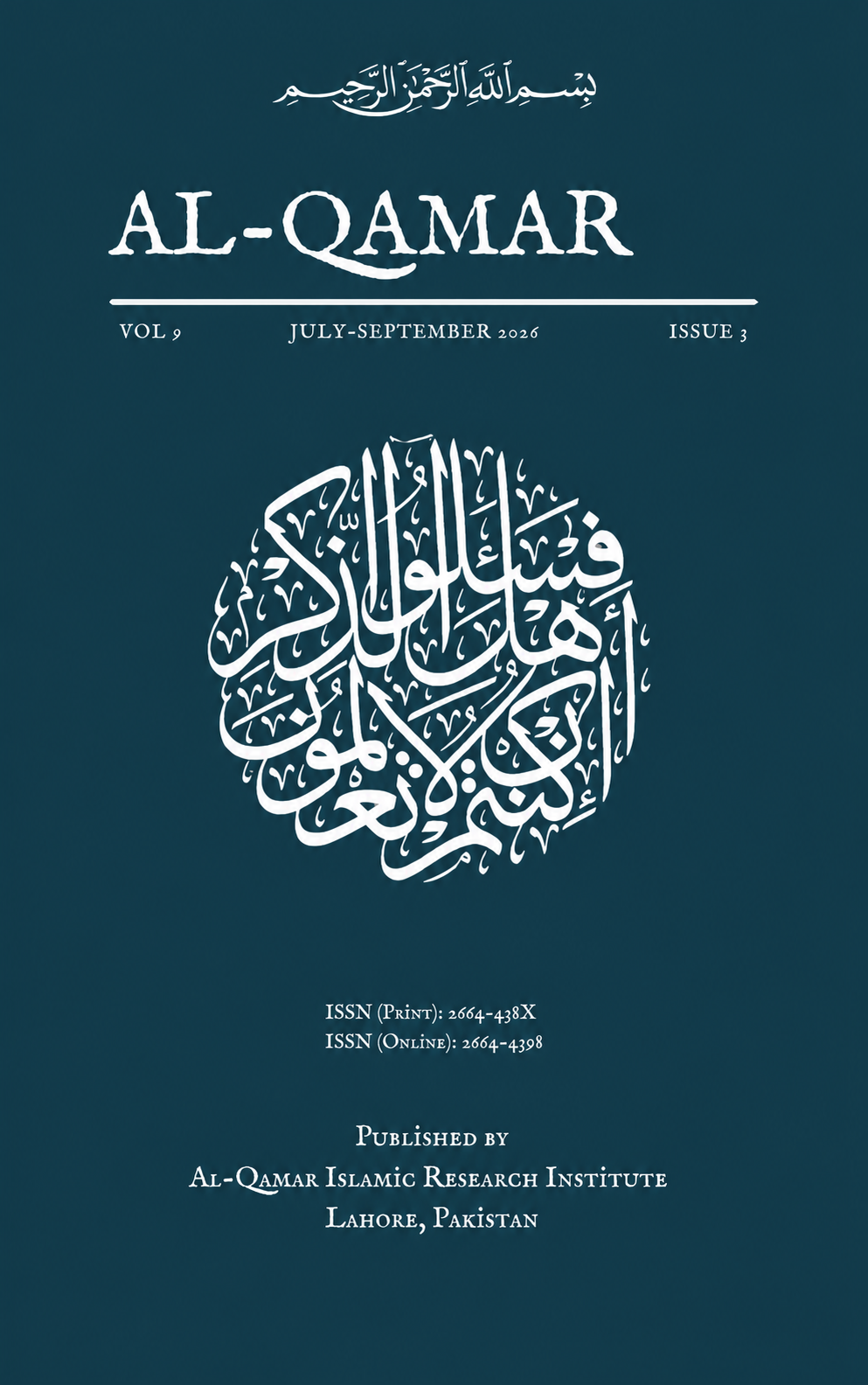
A double-blind peer-reviewed, open-access journal publishing scholarship in Islamic Studies, humanities, and related fields. Published by AQIRI.
A peer-reviewed, open-access journal publishing academic research in Islamic Studies, Muslim societies, humanities, law, and contemporary issues. Published by AQIRI.
Through its publication platforms and associated scholarly journals, AQIRI supports academic writing, research visibility, publication development, and responsible scholarly communication.
Academic Programs
Al-Qamar Islamic Research Institute offers structured academic opportunities for researchers, graduates, teachers, scholars, and professionals who wish to strengthen their work in Islamic Studies, research methodology, academic writing, and scholarly publication.
The programs are designed to support serious study, guided research, manuscript development, and publication-oriented academic training.
Postdoctoral Fellowships are intended for PhD scholars and advanced researchers who wish to pursue independent or guided research in Islamic Studies and related fields.
Fellows may work on research articles, monographs, edited volumes, translations, manuscript studies, or thematic research projects in areas such as Qur’anic Studies, Hadith, Seerah, Islamic law, Islamic thought, Islamic civilization, comparative religion, and contemporary Muslim society.
Explore Fellowships →Advanced Diplomas are designed for graduates, teachers, researchers, and professionals who require focused academic training in Islamic Studies, research methods, scholarly writing, editing, citation, publication ethics, and academic publishing.
These programs may include seminars, supervised reading, guided assignments, research papers, manuscript development, and publication-oriented training.
Explore Advanced Diplomas →AQIRI Updates
Latest calls, programs, admissions, and career announcements from AQIRI.
Announcements related to journal issues, special issues, thematic calls, book chapters, edited volumes, conference proceedings, and research publication opportunities.
Journal submissions · Special issues · Research articles · Publication calls View Calls →Announcements for academic workshops, training programs, seminars, lectures, conferences, webinars, short courses, and scholarly events.
Workshops · Seminars · Conferences · Lectures · Training · Webinars View Programs →Announcements for AQIRI’s academic training and diploma programs, including admission schedules, eligibility, deadlines, and application details.
Advanced Diplomas · Language and Islamic Texts · Research and Scholarly Writing Apply Now →Announcements for employment, internships, fellowships, postdoctoral opportunities, contributor roles, volunteering, and project-based assignments.
Careers · Internships · Fellowships · Contributors · Project roles View Opportunities →Work with us
We welcome collaboration with universities, scholars, research centers, libraries, journals, and publishers.
Start a conversation ↗